
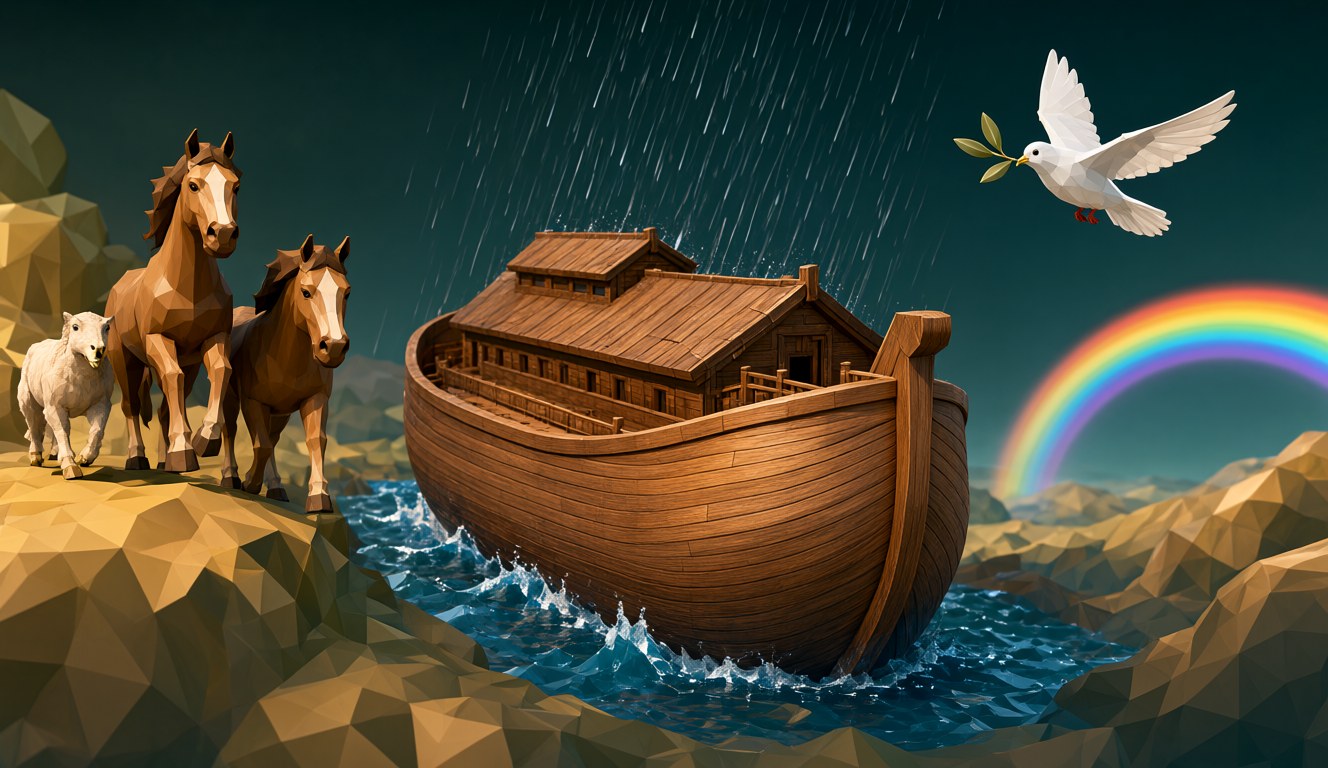
Kimi K3.1 Pro's second ark demo is better than the first. This OpenCode swarm-built version turns Noah's story into four interactive chapters, with Bible verses, changing weather, animal gatherings and an ambient soundscape. The presentation is stronger. I am still disappointed with the 3D rendering, and it still does not give me a "wow" moment.
You can try the swarm-built Noah Bible experience. The four chapters are The Call, The Gathering, The Flood and The Promise.
What did Kimi K3.1 Pro build in swarm mode?
It built a Vite and Three.js application rather than another single HTML file. The scene uses procedural geometry for the ark, animals, terrain and water. Scripture comes from the King James Version, and each chapter changes the camera, words and environment.
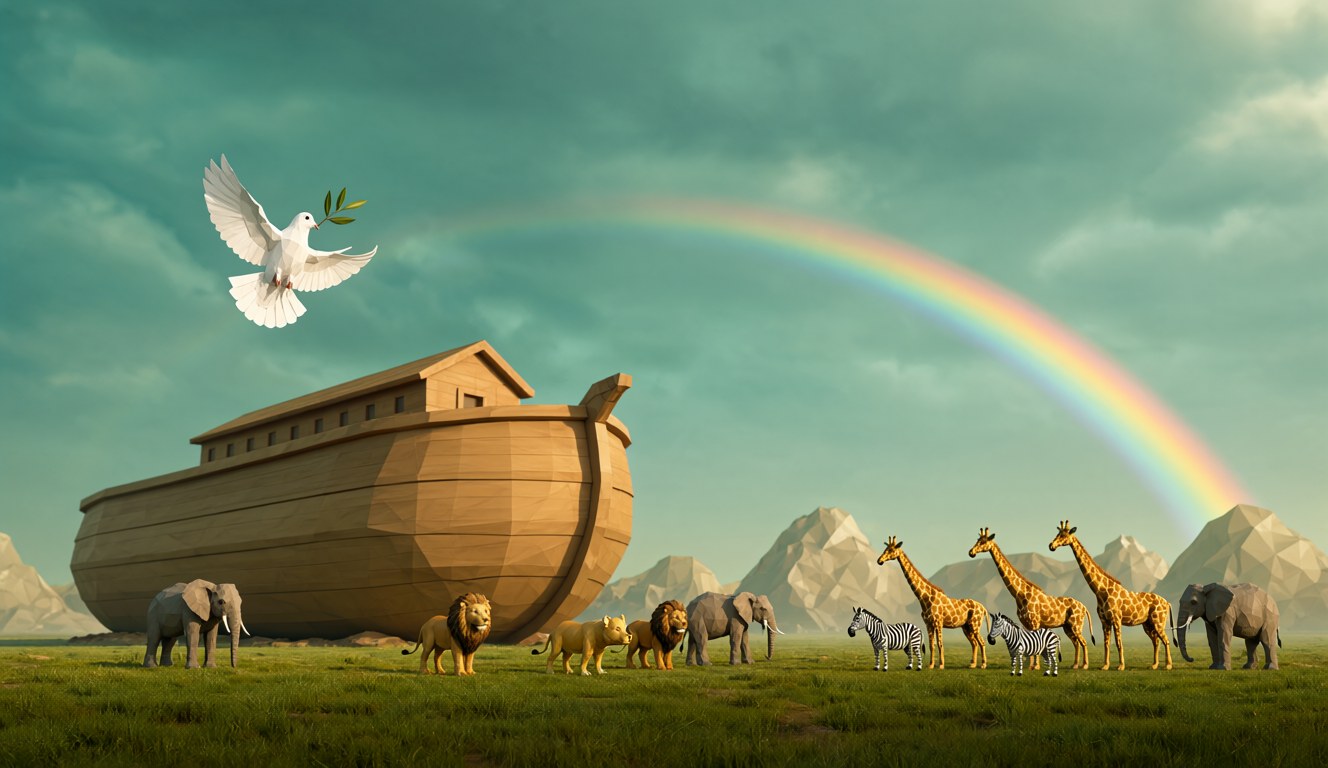
The Call shows the vessel and construction materials. The Gathering brings pairs of elephants, lions, giraffes and zebras into the scene. The Flood raises the water and adds heavy rain. The Promise lowers the water, reveals a rainbow and sends a dove across the ark with an olive leaf.
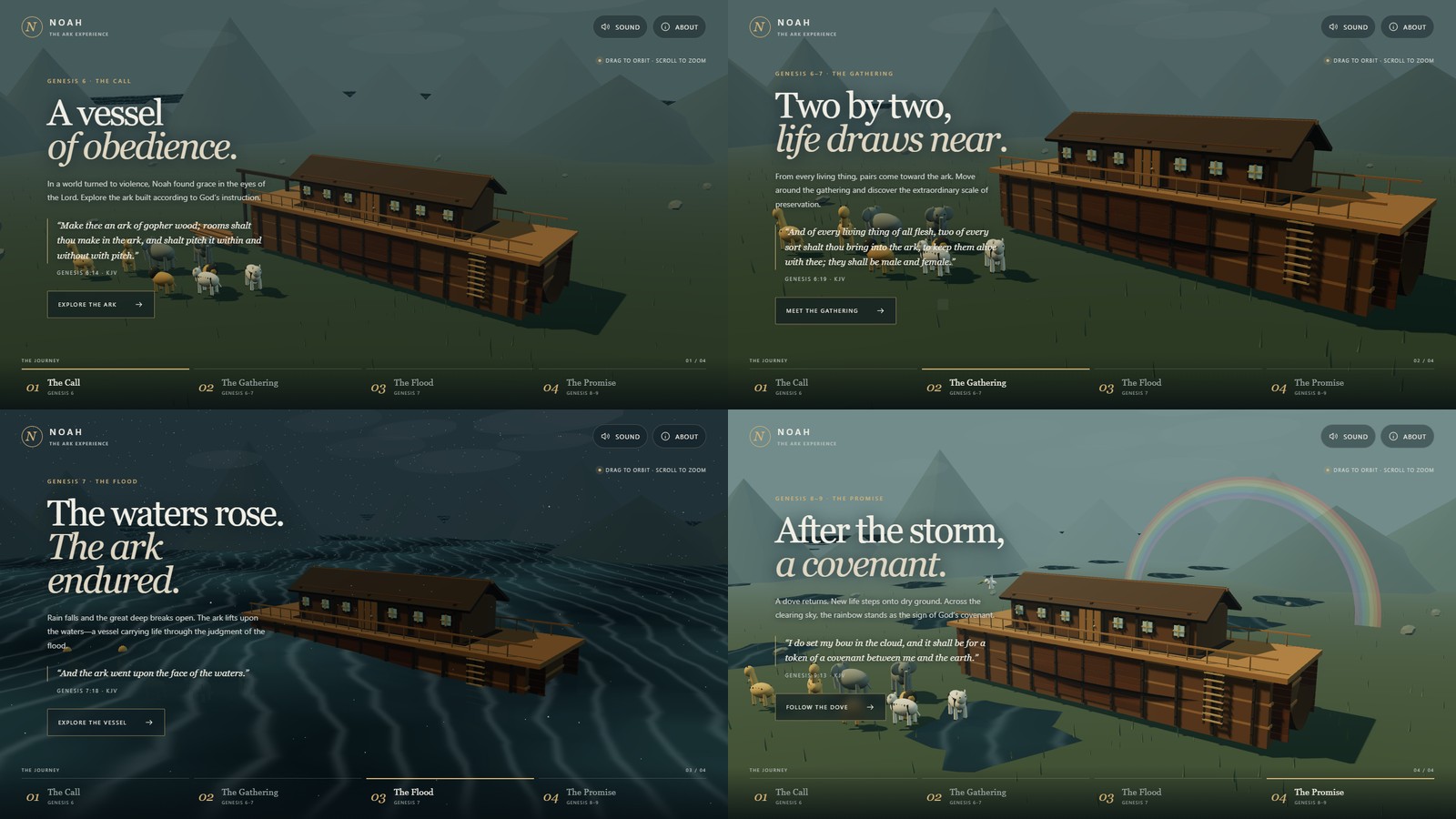
These are actual screenshots from the production build, not promotional mock-ups. Selecting a chapter transforms the same scene instead of loading a separate page. The chapter buttons also work with the left and right arrow keys.
Why is this swarm version better than the first ark?
It has a clearer purpose. My first Kimi ark test was a collection of interactive controls around a vessel. This one tells a story from Genesis 6 to Genesis 9, and the typography, chapter navigation and soundscape make it feel closer to a designed experience.
The environmental changes help most. Rain and rising water give The Flood a different mood, while the rainbow gives The Promise a proper ending. The optional sound is generated in code with filtered noise and a low drone, so the project does not download a music track.
The interaction is also more focused. An Explore button reveals relevant hotspots, including the ark's dimensions, window, animals and dove. Each hotspot connects the 3D object to a verse instead of opening a generic description.
Where does the 3D rendering fall short?
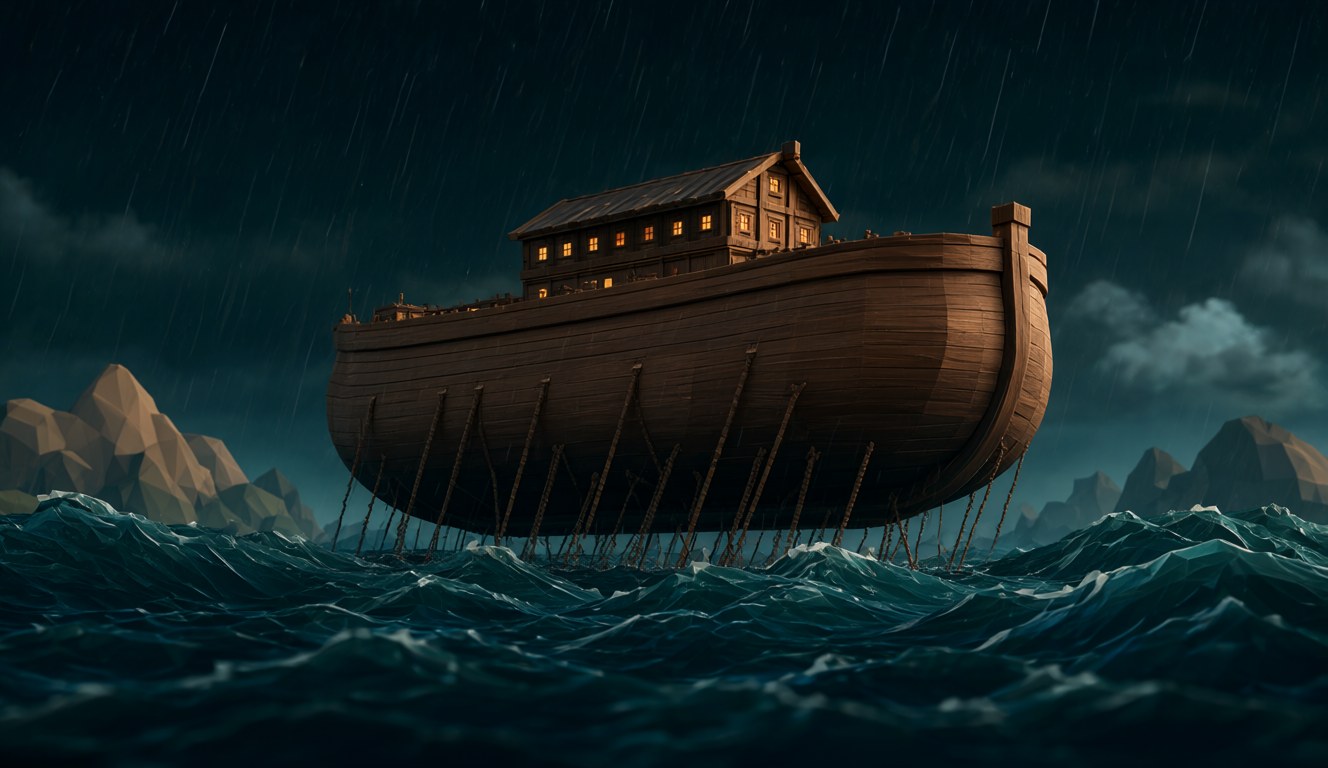
The scene is made of simple parts, and that remains obvious from normal viewing angles. The hull is boxy, the animals share a similar body template, and some clouds read as flat dark shapes. The floodwater has strong repeated lines that look more like moving ribbons than natural waves.
This is my main disappointment. Kimi promotes 3D creation as an area of strength, but generating a complete scene is not the same as producing the visual quality I want. A rainbow and a chapter transition can improve the presentation without fixing the underlying models.
There is also a trade-off in the project structure. The first demo was one HTML file with a CDN dependency. This swarm version has source files, npm dependencies and a build step. The production folder is easy to host, but the project is less immediate to edit or share as a single file.
Did the finished demo work in browser testing?
Yes. All four chapters rendered, the chapter-specific hotspots opened the expected text, and the sound button switched on and off. The keyboard chapter controls worked as well.
I checked the production build at desktop size and at 390 pixels wide. The mobile layout kept all four chapters accessible and had no horizontal page overflow. The browser reported no console errors or failed requests. The experience works. The models still need more work.
I did not record a controlled time, token or cost comparison between swarm mode and a single agent, so I cannot claim that the swarm was faster or cheaper. What I can judge is the finished application and the differences I can inspect.
Does every AI model have a different strength?
I think so, but a vendor's chosen strength still needs to survive a real project. Kimi can generate a substantial Three.js scene and connect it to an interactive story. That is useful. It does not mean its 3D output is automatically better than every other model.
My DeepSeek 3D game test measured time, tool calls and cost, while this article is a visual and functional comparison. For the vendor benchmarks behind Kimi's 3D claims, see my Kimi K3.1 Pro benchmarks and price article. Those scores and this hands-on test answer different questions.
Would I use Kimi swarm mode for another 3D project?
Yes, for a prototype or an interactive storyboard. The swarm version gives me more to react to, and its four-chapter structure is a better starting point than a static model. I would still expect to spend time on the art direction, geometry and water effects.
I am still disappointed. This demo is better than my first Kimi ark, but the 3D rendering is not as good as I want and the "wow" factor is still missing. That is my honest conclusion after using it, not a benchmark average or a claim about every project. Open the four-chapter demo and judge the rendering for yourself.
Sources
- Michael Leung: Noah — The Ark Experience, the production build tested on 27 October 2026.
- Kimi K3.1 Pro Test: A 3D Ark in OpenCode, the earlier interactive ark and its hands-on verdict.
- Kimi K3.1 Pro: Benchmarks, Price and Open Weights, including the vendor's BenchCAD and 3D creation claims.
Checked 27 October 2026. This is one hands-on comparison, not a controlled benchmark. The demo was created with Kimi K3.1 Pro in OpenCode swarm mode. AI helped test and edit this article. Three illustrations were made locally with Qwen Image 2.1; the four-chapter image is made from real demo screenshots.